How to Solve NCLEX Drop Down Cloze Questions
Solving nclex drop down cloze questions requires reading the whole sentence to connect causes with actions. These items place menus inside clinical statements. Candidates must check nearby words carefully. This step stops you from picking clashing rationales. Success depends on spotting key clues across the chart tabs. This process helps you build complete care plans without errors.

What are NCLEX Drop Down Cloze Questions? (The Problem)
The Next-Generation NCLEX uses cloze items to measure reasoning. These questions put drop-down menus directly inside clinical sentences. You might see them inside care plans or nursing notes. A single sentence can contain one or more drop-down menus.
Candidates often look at each menu alone. When you choose an option for Menu A without checking Menu B, you risk making contradictory selections. For example, a candidate might select a treatment for fluid overload in the first box. Then they choose a cause related to dehydration in the second box.
This mistake breaks the logic of the entire statement. The NCSBN model requires you to link findings directly to actions. Drop-down cloze items use 0/1 scoring, with one point for each correct menu. Drop-down rationale items differ: credit is awarded only when the linked parts are right together. Know which format you face. Making an error creates an incoherent care plan that threatens client safety.
You must treat the sentence as a unified clinical thought. Each phrase must support the other phrase. Reviewing our NCLEX study notes helps you see how clauses connect clinical facts. You will build steady habits that protect client outcomes on every shift. Clear habits also prevent rushed choices on exam day.
Why Drop Down Cloze Questions Matter (The Data)
Cloze items appear often in standalone items and case studies. The NCLEX-RN test plan emphasizes decision-making in multi-step scenarios. Drop-down items show whether you understand direct cause-and-effect pathways.
The NCLEXIT question bank contains 4028 practice questions in the bank (Source: NCLEXIT production data). The bank includes drop-down cloze items to prepare candidates for exam day interfaces. Regular practice builds familiarity with realistic electronic charts.
In addition, candidates work through 52 unfolding case-study scenarios (Source: NCLEXIT production data) on NCLEXIT. Each case study maps directly to Step 1 through Step 6 of the Clinical Judgment Measurement Model. These six steps sit in Layer 3 of the model. They guide how nurses recognize cues, analyze cues, and prioritize hypotheses. They also help nurses generate solutions, take action, and evaluate outcomes.
Practicing these items prevents candidates from making hasty choices. In complex rationales, one wrong choice ruins the logic of the entire sentence. Candidates must always match the prescribed intervention with the root problem. Each selection changes the meaning of the care plan. Careful practice helps you connect signs to safe care choices.
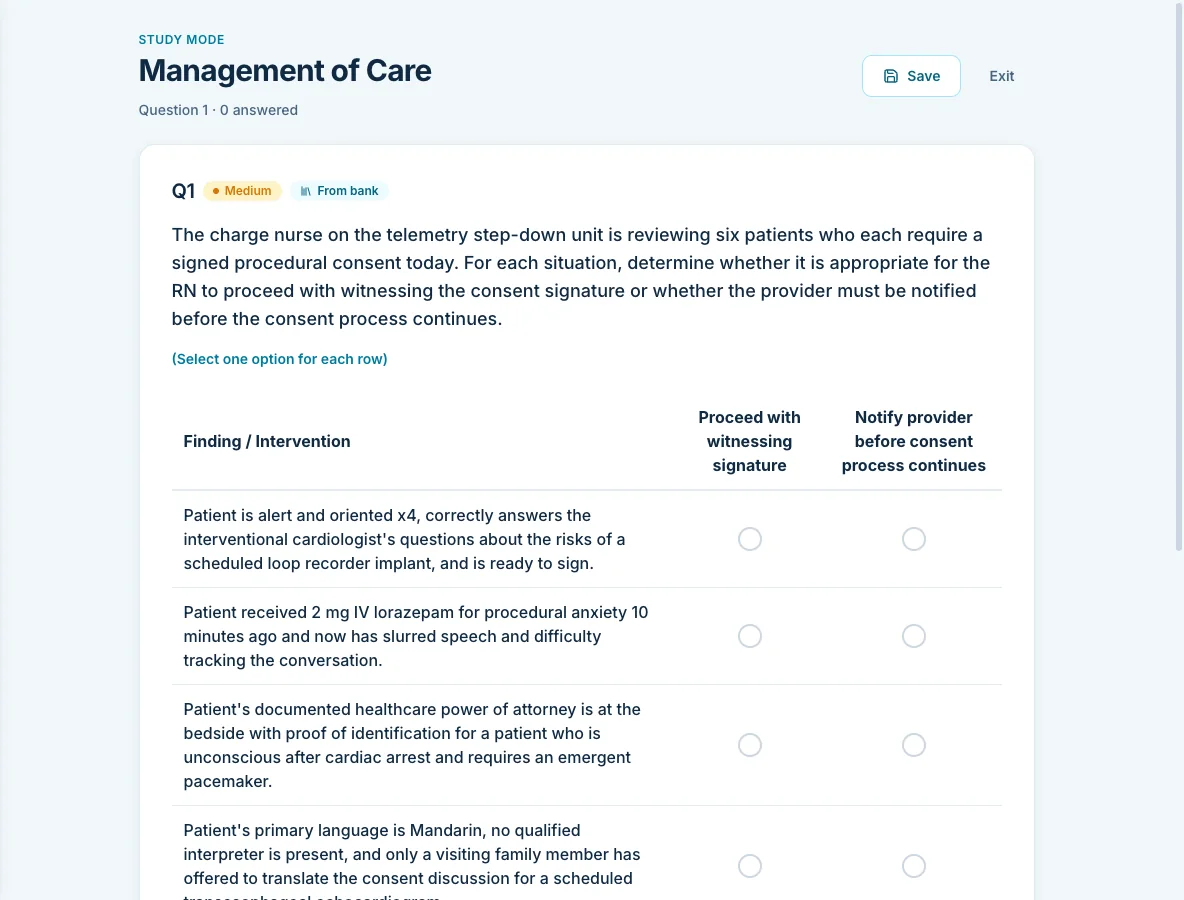
Step-by-Step: How to Approach NCLEX Drop Down Cloze Questions (The Solution)
Follow this step-by-step method when you answer nclex drop down cloze questions on your exam.
Step 1: Read the Entire Sentence with Blanks
Do not open the menus right away. First, read the full sentence from start to finish. Look for linking words such as 'because', 'as evidenced by', or 'due to'. These words explain the logical link between both parts of the sentence.
Step 2: Identify the Primary Client Cue
Next, look at the client chart data. Review the vital signs, lab results, and recent notes. Find the main abnormal finding that needs fast care. Always check for an adverse drug reaction or sudden clinical change before picking actions. For instance, early signs of rising intracranial pressure include restlessness, confusion, and headache. In contrast, Cushing's triad is a late sign. You must catch these subtle cue shifts early.
Step 3: Predict the Underlying Mechanism
Before you click the options, decide what problem is happening. If the client has lung crackles and neck vein distention, suspect fluid overload. Holding this idea in mind keeps you focused during your choice.
Step 4: Align Interventions with Pathophysiology
Select the first drop-down option based on your initial idea. Then, make sure the second choice matches that same cause. If you choose a diuretic first, the next choice must describe fluid removal.
Step 5: Re-Read the Completed Statement
Read the entire completed statement in your head. Check that the first half matches the second half. If the two parts clash, change your choices before submitting.
To build your skill, use a structured NCLEX study plan made for NGN question types. Routine drills will sharpen your clinical judgment across every client scenario.
Common Mistakes to Avoid (The Warning)
Candidates often lose points on cloze questions from basic test habits. Knowing these errors helps you keep points on test day.
The most common mistake is performing an isolated menu assessment. In this error, a candidate treats each drop-down menu like an independent question. This leads to picking two answers that sound good alone but clash together.
Another frequent trap is missing linking phrases. Words like 'secondary to' demand a clear direction of cause. Confusing the symptom with the cause leads to a backwards rationale statement.
Candidates also pick actions outside their role. When reviewing orders, confirm the action is an independent nursing action unless the item states a provider order. Do not guess on collaborative tasks when basic nursing steps come first. When ethics or safety rules apply, follow standard protocol. For example, a staff nurse who suspects an impaired colleague reports immediately to the charge nurse or supervisor.
You can build your safety habits by reviewing NCLEX delegation and prioritization guides before testing.
Expert Insight and What Changes Next (The Authority)
Licensing exams in the United States and Canada continue to refine interactive question types. Regulators such as the NCSBN and Canadian provincial colleges want to test clinical reasoning. They aim to assess practical judgment rather than simple memorization.
To support this goal, NCLEXIT includes 130 voice scenarios with a recorded discrimination index (Source: NCLEXIT production data). These simulations achieve a 61.1 mean discrimination index across voice scenarios (Source: NCLEXIT production data). This score measures how well a scenario separates safe responses from unsafe ones in pre-release testing.
Cloze questions often sit inside detailed chart tabs. You should practise reading full client records. Candidates must track data shifts across the entire record. Mastering nclex drop down cloze questions helps you assess complex client files with confidence.
Always verify each choice against the whole client story. Using a deliberate cue recognition process prevents unforced errors. Consistent logic leads to safe outcomes and exam success.
Frequently asked questions
How does scoring work for NCLEX drop-down cloze items?
Drop-down cloze questions use 0/1 scoring, earning one point for each correct menu. Drop-down rationale items award credit only when the linked parts are right together.
Can drop-down menus appear inside tables on the NCLEX-RN?
Yes. Drop-down cloze options can appear inside sentences, narrative nursing notes, or tabular care plans.
How do I avoid picking contradictory rationales in cloze items?
Read the full sentence with both selections in place before submitting. Ensure the chosen intervention directly addresses the specific cause in the paired clause.
Are cloze questions used on both US and Canadian NCLEX exams?
Yes. Both NCSBN candidates in the United States and candidates registered with Canadian provincial regulatory colleges receive the same Next-Generation NCLEX format.
Get new insights as they publish
One evidence-checked article at a time, plus a free-trial link. No sequence, one click unsubscribes.