NCLEX Bow Tie Questions Strategy for NGN Exams
The most effective NCLEX bow tie questions strategy requires candidates to anchor the central condition first. Complete this step before picking actions or monitoring parameters. Bow-tie items present a client chart beside interactive target drop zones. Candidates drop points when they pick interventions for single cues. They overlook the main disease process. First, recognize and analyze all cues. Next, identify the primary problem. Then, link two targeted actions and two monitoring parameters directly to that central condition.

Understanding Bow-Tie Items on the NCLEX-RN (The Problem)
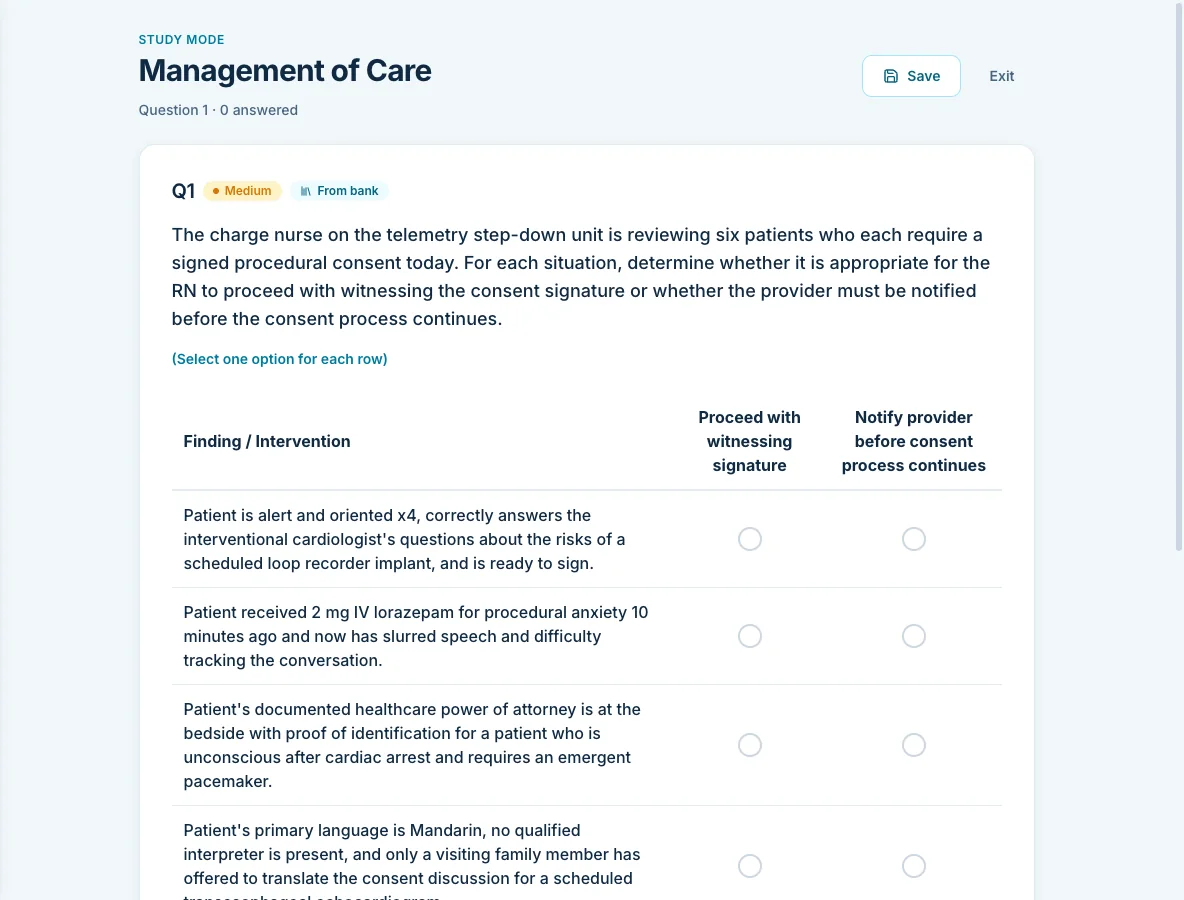
Next-Generation NCLEX items evaluate candidate judgment using full client stories. The bow-tie format is a single-screen, stand-alone item that evaluates multiple aspects of clinical judgment. It applies the Clinical Judgment Measurement Model to realistic scenarios. You receive an electronic health record with nurses' notes, vital signs, lab values, and history.
The visual screen looks like a bow tie. The central box holds the potential condition. This condition represents the main problem for the client. The left side draws from a list of potential actions. The right side draws from a list of monitoring parameters. You must drag and drop one condition, two actions, and two parameters into the active boxes.
Many candidates struggle because these target boxes link together. A candidate might pick a good action for one symptom. Yet that action can contradict the true illness. Picking isolated answers leads to cascading errors across the whole item. Candidates must avoid fragmented choices during their assessment. Structured prioritization and delegation habits help candidates build safe clinical routines. Practicing item steps in order protects client safety.
Why the Bow-Tie Format Demands a Specific Workflow (The Data)
Bow-tie items carry substantial weight on the exam. Bow-tie items use partial-credit scoring rules, with 0/1 scoring for each of the five target boxes. You earn points for the correct central condition. You also earn points for valid actions and appropriate monitoring parameters.The central condition is worth one point, but it steers every other choice you make. Choosing the wrong illness usually leads you to pick the wrong actions. For instance, you might choose actions for excess fluid when the client has septic shock. Those actions would not match the key, so they would earn zero points. NCLEXIT provides 4028 practice questions in the bank so candidates can drill these formats (Source: NCLEXIT production data).
Candidates must evaluate client data under a timed setting. The NCLEX-RN exam provides a 5-hour clock for 85 to 150 questions. Managing time requires a clear method for every complex screen. Following a disciplined structured study plan helps you build speed and accuracy. Mastering the nclex bow tie questions strategy keeps your timing on track across Next-Gen screens.
Step-by-Step: How to Master the NCLEX Bow Tie Questions Strategy (The Solution)
To maximize your score on bow-tie items, follow a disciplined six-step process. Never look at the answer options before you read the chart.
Step 1: Recognize and Group Clinical Cues
Review the client record first. Check the vital signs, lab results, and progress notes. Group related abnormal findings together. Focus on acute changes from baseline values. Note cues that seem contradictory.
Step 2: Formulate Differential Hypotheses
Compare your grouped cues to common illnesses. Ask yourself what acute problem causes all these findings. Discard conditions that match only one isolated symptom. Focus on problems that account for every critical finding.
Step 3: Anchor the Central Condition
Select the most likely condition and place it in the center box. This diagnosis serves as your clinical anchor. Every choice after this step must match this problem. Do not change your anchor unless you find a major conflict in the data.
Step 4: Select Two Targeted ActionsReview the action options on the left. Choose two interventions that treat the central condition directly. Make sure each action fits the RN scope of practice. Verify that both choices stabilize the client quickly.Step 5: Select Two Monitoring ParametersReview the parameter options on the right. Find two metrics that show if the client gets better or worse. Ensure these parameters track the main risks of the chosen illness and treatments.Step 6: Review the Full Clinical Picture
Step 6: Review the Full Clinical Picture
Read the completed screen from left to right as one plan. Confirm that the actions treat the center box. Check that the parameters measure the outcome. The nclex bow tie questions strategy relies on this final complete review.
Common Mistakes to Avoid on Bow-Tie Questions (The Warning)
Candidates lose points on bow-tie items when they take mental shortcuts. Learn these common traps so you can avoid them on test day.
- Selecting actions first: Picking interventions before confirming the problem leads to distractor choices.
- Ignoring conflicting laboratory data: Overlooking a single contradictory lab result leads to a wrong central diagnosis.
- Treating stable chronic conditions: Focusing on old baseline issues rather than the new acute crisis costs points.
- Selecting non-specific parameters: Choosing vague metrics rather than parameters specific to the target problem lowers your score.
Another frequent mistake is missing drug interactions. You must confirm that chosen actions do not harm the client based on their chart history. Unsafe medication administration remains a major issue for new graduates. Reviewing core pharmacology with an intelligent tutoring system helps you avoid harmful errors.
Expert Insight: Connecting Bow-Tie Items to Practice (The Authority)
The bow-tie question mirrors bedside nursing care. When an acute change happens, a nurse reviews data quickly. The nurse identifies the complication, carries out orders, and evaluates client responses. The NCSBN designed this item format to test safe reasoning from start to finish.
Regulators in the United States and Canadian provincial colleges require strong clinical judgment for licensure. Rote memorization is not enough for complex multi-step screens. Nurses must understand how their actions alter body systems and vital trends. Candidates must make sound decisions under pressure.
NCLEXIT measures clinical judgment with 130 voice scenarios that record a discrimination index (Source: NCLEXIT production data). These voice scenarios hold a 61.1 mean discrimination index (Source: NCLEXIT production data). NCLEXIT also provides 52 unfolding case-study scenarios to build systematic habits (Source: NCLEXIT production data). Practicing a repeatable nclex bow tie questions strategy gives you the skill to solve every item with precision.
Frequently asked questions
How is a bow-tie question scored on the NCLEX-RN?
Bow-tie items use partial-credit scoring across the selected target boxes. Candidates receive credit for correct selections in the condition, action, and monitoring parameter drop zones.
Can I pick more than two actions or two parameters on a bow-tie item?
No. The bow-tie interface requires exactly one condition in the center, two actions on the left, and two monitoring parameters on the right.
What should I do if two conditions seem equally plausible?
Re-examine the electronic health record to find distinguishing cues such as specific lab trends or acute vital sign changes. Usually one condition explains the findings better, while the other conflicts with at least one key cue.
Are bow-tie questions presented as standalone items or case studies?
Bow-tie items are standalone questions on the NCLEX-RN. They contain all necessary client data within a single screen rather than unfolding across multiple sequential questions.
Get new insights as they publish
One evidence-checked article at a time, plus a free-trial link. No sequence, one click unsubscribes.