NCLEX Fluid and Electrolytes Clinical Cues and Nursing Actions
Recognizing nclex fluid and electrolytes clinical cues requires mapping subtle client signs to urgent nursing actions. You must detect dangerous trends in electrolyte imbalances. Examples include tall peaked T waves in high potassium and positive Trousseau signs in low calcium. By analyzing these subtle assessment cues in the health record, you can prioritize hypotheses. You can then take safe clinical action before complications occur.

What Are NCLEX Fluid and Electrolytes Clinical Cues? (The Problem)
On the NCLEX-RN, fluid and electrolyte questions test more than simple lab recall. The National Council of State Boards of Nursing (NCSBN) evaluates multi-system cue synthesis. These questions appear inside unfolding clinical case studies. A candidate must interpret cues across vital signs, nurses notes, intake charts, and telemetry strips.
A major challenge is separating expected findings from urgent physiological alarms. A client receiving loop diuretics might show mild muscle fatigue. However, new heart dysrhythmias or severe neuromuscular irritability signal a rapid decline. These findings require immediate action. Missing these cues leads to incorrect prioritization in unfolding case studies.
Fluid shifts can also mask underlying electrolyte imbalances. In severe dehydration, blood concentration makes serum sodium look elevated. Yet total body sodium stores may remain depleted. Misinterpreting these lab trends leads to poor fluid choices and acute lung congestion.
Candidates must connect body mechanisms directly to bedside findings. You must spot when altered mental status indicates hyponatremic encephalopathy rather than simple confusion. Understanding this link allows you to prioritize care safely on exam day.
Why NCLEX Fluid and Electrolytes Clinical Cues Matter in 2026 (The Data)
The Next-Generation NCLEX tests clinical judgment through six core cognitive steps. Fluid and electrolyte balance spans multiple test categories. These categories include Physiological Adaptation and Reduction of Risk Potential. Candidates must show safe decision-making across diverse client profiles in the United States and Canada.
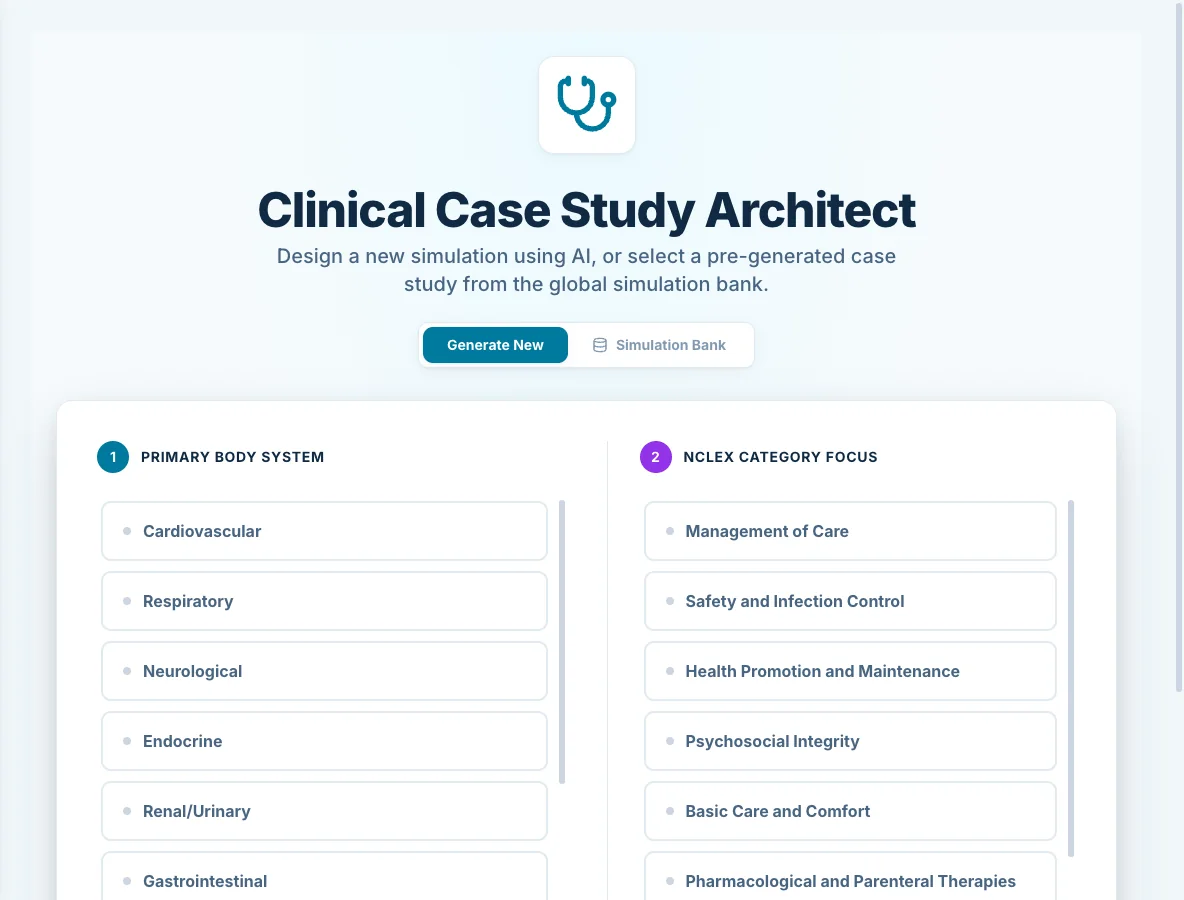
NCLEXIT provides adaptive study sessions and a bank of 4028 practice questions (Source: NCLEXIT production data). Unfolding clinical case studies run inside a patient chart with six questions each. Voice clinical simulation lets the student speak with an AI-played client or colleague. Every scenario is minted offline through a five-gate pipeline that records a discrimination index. It achieves a 61.1 mean discrimination index across voice scenarios (Source: NCLEXIT production data). This discrimination index measures how well a scenario separates safe responses from unsafe ones in pre-release testing.
Sound clinical judgment requires recognizing how electrolyte shifts alter cell membrane potentials. When potassium rises above safe limits, heart conduction slows rapidly. If a nurse fails to spot tall peaked T waves, ventricular fibrillation can follow swiftly.
Rapid changes in serum sodium induce water movement across the blood-brain barrier. The NCSBN emphasizes these high-risk clinical scenarios to protect client safety. You can practice recognizing these multi-layered cues in our comprehensive nclex study plan. In addition, review our guide to severe electrolyte shifts during your study week.
Step-by-Step: How to Approach NCLEX Fluid and Electrolytes Clinical Cues (The Solution)
Approaching nclex fluid and electrolytes clinical cues requires a clear method. Align your process with the NCSBN Clinical Judgment Measurement Model. Follow these steps, built on the six Clinical Judgment Measurement Model steps, to analyze complex case studies effectively.
Step 1: Recognize Subtle Multi-System Cues
Begin by scanning the client chart for abnormal findings. Check telemetry strips for a prolonged QT interval, which fits low calcium. Look for T-wave or U-wave changes that suggest a potassium imbalance. Inspect physical assessment notes for positive Chvostek or Trousseau signs. These cues point directly to acute hypocalcemia.
Step 2: Analyze Fluid Balance and Lab Trends
Compare consecutive serum electrolyte panels against fluid intake and output totals. Differentiate between true volume depletion and third-spacing fluid shifts. Look closely at urine concentration and blood osmolality. Check daily weight changes to determine the exact fluid state.
Step 3: Prioritize Hypotheses Based on Life Threats
Rank client problems using the Airway, Breathing, and Circulation framework. Prioritize cardiac dysrhythmias and acute breathing decline over mild tingling. Determine whether the client faces an immediate risk of lethal cardiac arrest or brain swelling.
Step 4: Generate Solutions and Take Action
Select targeted nursing actions while verifying safety parameters. Never administer undiluted intravenous potassium. Rapid potassium bolus delivery can be fatal. For severe hyperkalemia, prepare prescribed calcium gluconate first. This medication stabilizes heart membranes before you give insulin and dextrose.
Step 5: Evaluate Clinical Outcomes and Adjust Care
Reassess the client after delivering prescribed interventions. Monitor continuous cardiac telemetry and repeat serum lab panels. Listen to lung sounds for crackles during fast fluid replacement. You can master this systematic evaluation by reviewing our detailed nclex study notes.
Common Mistakes to Avoid (The Warning)
A common error on fluid balance items is failing to catch fluid volume excess early. Candidates often wait for leg swelling before spotting hypervolemia. Subtle signs like new extra heart sounds, neck vein distension, and rapid breathing occur much earlier.
Another dangerous mistake is correcting chronic sodium imbalances too quickly. Giving hypertonic saline too fast can trigger osmotic demyelination syndrome. Candidates must know safe infusion rates. You must monitor neurological status every hour during sodium replacement therapy.
Candidates also confuse the signs of low potassium with high potassium. High potassium produces tall T waves and widened QRS complexes. Low potassium causes prominent U waves and muscle limpness. Both imbalances cause muscle weakness, but their heart rhythms differ completely.
Do not overlook the balance between calcium and phosphorus. These electrolytes maintain an opposite relationship in the blood. Candidates frequently miss underlying low calcium when reviewing high phosphate levels in kidney disease. Enhancing your decision skills with our ai nclex tutor helps prevent these costly mistakes on exam day.
Expert Insight and What Changes Next (The Authority)
Modern nursing practice demands strong competence in fluid management. Entry-level nurses frequently manage complex intravenous therapies, kidney replacement, and vasoactive infusions. Licensure exams place heavy emphasis on recognizing decline caused by electrolyte disturbances.
When analyzing clinical scenarios, always consider baseline organ function. A client with adrenal insufficiency cannot conserve sodium effectively during acute illness. Recognizing this baseline body process helps you predict electrolyte trends early. You can anticipate problems before critical lab values return from the laboratory.
Understand the regulatory expectations set by the NCSBN and provincial colleges in Canada. Regulatory bodies expect entry-level nurses to recognize early cues of hypomagnesemia, which can cause hypocalcemia that resists correction. You must advocate for appropriate provider orders. Safe clinical practice requires proactive surveillance rather than passive waiting. Always double-check every critical lab alert before giving scheduled heart drugs.
By mastering nclex fluid and electrolytes clinical cues, you build the clinical judgment needed for real-world bedside nursing. Practice identifying these trends systematically. This habit supports client safety across every clinical setting.
Frequently asked questions
What are the earliest clinical cues of hyperkalemia on an ECG?
Tall, peaked T waves are the earliest ECG sign of hyperkalemia. As potassium levels rise further, the PR interval prolongs, the P wave flattens, and the QRS complex widens.
How do you assess for latent tetany in suspected hypocalcemia?
Inflate a blood pressure cuff above systolic pressure for three minutes to check for carpopedal spasm (Trousseau sign). You can also tap the facial nerve anterior to the ear to assess for facial twitching (Chvostek sign).
Why is potassium never administered via IV push?
Intravenous push potassium causes immediate cardiac arrest and lethal dysrhythmias. Potassium must always be diluted in IV fluids and infused slowly using an electronic infusion pump.
What is the primary danger of rapid hyponatremia correction?
Correcting severe hyponatremia too rapidly can lead to osmotic demyelination syndrome, causing permanent brain stem damage. Serum sodium correction rates must be carefully controlled with hypertonic saline.
Get new insights as they publish
One evidence-checked article at a time, plus a free-trial link. No sequence, one click unsubscribes.