NCLEX Infection Control Precautions Guide: Isolation and Prioritization
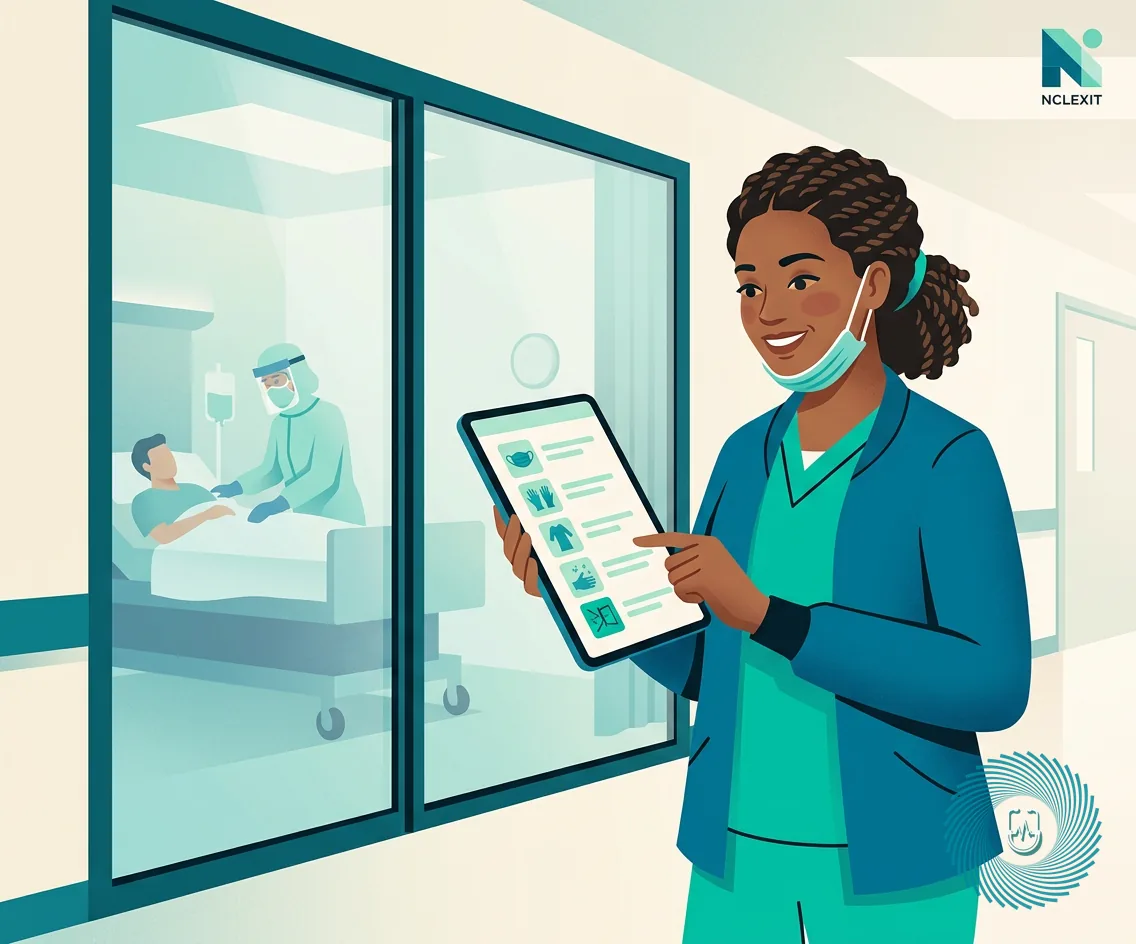
What is the nclex infection control precautions guide? (The Problem)
Infection control items appear across multiple client needs categories on the NCLEX-RN. Candidates often confuse pathogen categories under test pressure. A single mistake in personal protective equipment selection can cause an unsafe practice error. The NCSBN and provincial nursing regulators test these topics to verify safe entry-level care.
Standard precautions apply to all client interactions. You use them regardless of suspected infection status. Transmission-based precautions apply when standard barriers alone cannot stop the spread of germs. These categories include contact precautions, droplet precautions, and airborne precautions. Protective precautions guard vulnerable clients against outside germs.
Exam questions rarely ask for simple definitions. Instead, the item stem provides clinical cues inside an electronic health record. You must evaluate lab findings, symptoms, and medical history. Then, you must assign a room and pick correct barrier gear. Candidates who lack a structured framework often miss subtle pathogen cues.
Using a reliable nclex infection control precautions guide helps you sort client symptoms quickly. It allows you to protect staff and vulnerable clients from infection risks.
Why infection control precautions matter in 2026 (The Data)
Safety and Infection Control remains a primary category on the NCLEX-RN test plan. Candidates from the United States and Canada must prove competence in containment steps. The exam tests your ability to protect vulnerable clients from hospital-acquired infections. Reviewing structured nclex study notes can help reinforce these core infection pathways.
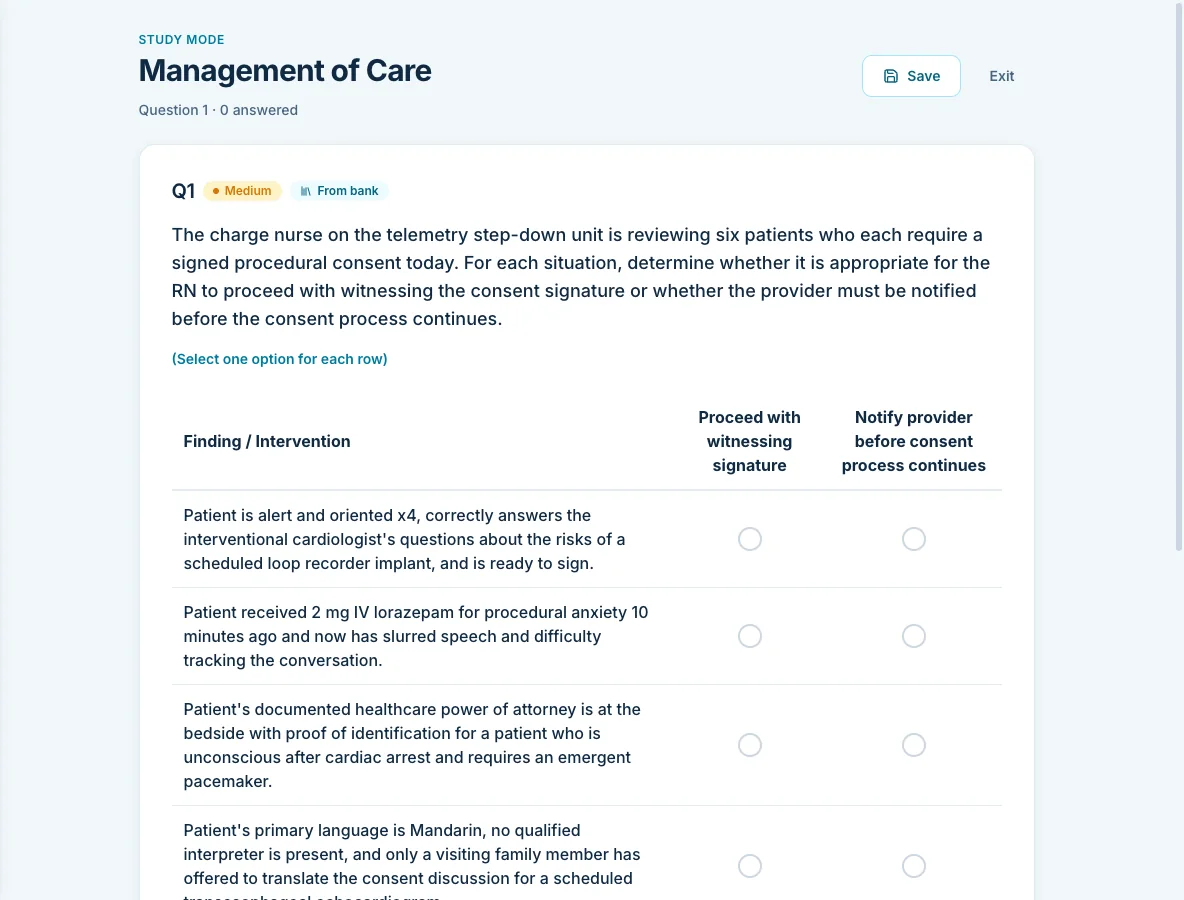
Next-Generation NCLEX case studies embed isolation measures directly into unfolding clinical decisions. A case study might require you to modify room assignments after new lab results appear. The NCLEXIT bank contains 4028 practice questions (Source: NCLEXIT production data). Many of these items test client placement, barrier equipment, and cross-contamination risks.
Clinical judgment also extends to spoken communication during clinical handoffs. Voice simulation data across 130 scenarios shows a 61.1 mean discrimination index (Source: NCLEXIT production data). This metric shows each voice scenario reliably separates safe responses from unsafe ones. Knowing how to isolate pathogens is vital for safe practice.
Understanding isolation rules prevents dangerous nosocomial outbreaks on busy inpatient units. It also ensures you assign the correct isolation signage before entering a client room.
Step-by-step: how to approach the isolation framework (The Solution)
Follow these four steps whenever you encounter an isolation scenario on the NCLEX-RN.
Step 1: Identify the pathogen and mode of transmission
Scan the client record for confirmed diagnoses, pending cultures, and specific clinical symptoms. Group the pathogen into its primary transmission route. This includes contact, droplet, airborne, or immunocompromised status. For example, open wound drainage with MRSA indicates contact transmission. Fever, stiff neck, and petechial rash suggest meningococcal disease, which requires droplet precautions.
Step 2: Assign the correct room environment
Determine whether the client requires a private room or specialized air filtration. Clients with airborne pathogens require a negative pressure room with continuous air exchanges. Clients requiring droplet or contact precautions need a private room or cohorting with the same pathogen. Pair this decision with principles from nclex delegation prioritization to manage bed assignments safely.
Step 3: Select and sequence personal protective equipment
Select PPE based on the specific mode of transmission. For contact isolation, put on a gown and gloves before room entry. For droplet isolation, wear a surgical mask on room entry or within 3 to 6 feet of the client. For airborne pathogens like measles or active tuberculosis, don a fitted N95 respirator before entering.
Step 4: Establish equipment and transport protocols
Dedicate single-use medical equipment to the isolation room. This equipment includes stethoscopes and blood pressure cuffs. If transport is essential for a droplet or airborne client, place a surgical mask on the client. For clients with severe immunosuppression, maintain a positive pressure room and prohibit fresh flowers or unwashed produce.
Common mistakes to avoid (The Warning)
A common error is using alcohol hand sanitizer for Clostridioides difficile infections. Alcohol does not kill bacterial spores. You must wash your hands with soap and water after caring for these clients. Forgetting this rule is a major safety violation on the exam.
Another frequent mistake involves incorrect sequencing for PPE removal. Candidates often remove masks first instead of gloves. Gloves are considered the most contaminated item and must come off first. Always remove your respirator or mask last, outside the client room when managing airborne precautions.
Candidates also confuse room air pressure directions. An airborne client needs negative pressure to pull air inward. An immunocompromised client needs positive pressure to push unfiltered air outward. Placing an immunocompromised client in negative pressure creates a severe contamination hazard. Our nclex for canadian candidates guide covers these distinctions for Canadian test-takers.
Do not transport an isolated client unless it is medically necessary. Transporting clients without proper barriers increases the risk of unit-wide exposure.
Expert insight and what changes next (The Authority)
Modern exam items evaluate how you respond when a client condition evolves over time. An item may present a client admitted with a cough who later develops night sweats and hemoptysis. You must recognize these cues promptly and upgrade precautions without waiting for physician orders. Prompt action protects the entire clinical unit.
You must also distinguish between client cohorting rules. Two clients with the same confirmed organism may share a room if private rooms are unavailable. However, never cohort clients with different strains or active secondary infections. Maintaining strict adherence to this nclex infection control precautions guide helps prevent dangerous cross-transmission.
Mastering these precaution categories builds a strong foundation for both standalone items and unfolding case studies. Review PPE sequences, room requirements, and hand hygiene rules until they become automatic. Consistent application of these clinical judgment steps will support safe decision-making on exam day.
Always verify transmission routes before assigning assistive personnel to client rooms. Safe delegation ensures that all team members use proper barrier gear consistently.
Frequently asked questions
What PPE is required for airborne precautions on the NCLEX-RN?
Airborne precautions require a fitted N95 respirator or higher-level mask before entering the client room. The client must also stay in an airborne infection isolation room with negative airflow.
How does hand hygiene differ for Clostridioides difficile?
You must wash hands with soap and water rather than alcohol-based sanitizer. Soap and running water physically remove resistant C. difficile spores from the skin surface.
Which pathogens require droplet precautions?
Droplet precautions are used for influenza, pertussis, mumps, rubella, and Neisseria meningitidis. Staff must wear a surgical mask when working within close distance of the client.
What is the correct order for removing personal protective equipment?
The standard sequence is gloves first, followed by goggles or face shield, gown, and mask or respirator last. Perform hand hygiene immediately after removing all PPE.
Get new insights as they publish
One evidence-checked article at a time, plus a free-trial link. No sequence, one click unsubscribes.