NCLEX Matrix Multiple Response Question Strategy: Scoring and Steps
An effective nclex matrix multiple response question strategy requires distinguishing matrix multiple-response grids from matrix multiple-choice grids. Matrix multiple-response items allow candidates to select multiple check boxes per row or column. These items use +/- scoring with a total item floor of zero. To protect earned points, you must evaluate each cell independently against the client chart and select only options supported by clear evidence.

What is nclex matrix multiple response question strategy? (The Problem)
Next-Generation NCLEX items present clinical scenarios through interactive grid tables. Many candidates confuse matrix multiple-choice with matrix multiple-response items. This confusion leads to lost points and flawed timing during the examination.
Matrix multiple-choice grids use radio buttons. Each row allows exactly one selection. NCSBN scores these items using 0/1 scoring per row. In contrast, matrix multiple-response items feature square check boxes. You may select one or more options across rows and columns.
Matrix multiple-response items use plus-minus scoring. Every correct selection adds one point. Every incorrect selection deducts one point. The total score for the entire item cannot drop below zero. Guessing blindly creates a significant negative penalty risk that erases earned credit.
To master this format, explore our targeted NCLEX question quality guide. Candidates must recognize the visual interface differences instantly. Understanding the underlying scoring model prevents unnecessary point losses on complex unfolding case studies.
Why nclex matrix multiple response question strategy matters in 2026 (The Data)
Since April 2023, the NCLEX-RN features 85 to 150 items. Each candidate encounters three full unfolding case studies containing six items each. Grid items appear frequently across these case studies to assess complex clinical decisions.
These items test Layer 3 cognitive operations from the NCSBN Clinical Judgment Measurement Model. Specifically, they evaluate Steps 1 through 6: recognize cues, analyze cues, prioritize hypotheses, generate solutions, take action, and evaluate outcomes. A robust nclex matrix multiple response question strategy ensures candidates process multi-layered clinical data systematically.
The NCLEXIT item bank contains 4028 practice questions (Source: NCLEXIT production data). Our curriculum includes 52 unfolding case-study scenarios (Source: NCLEXIT production data). In addition, students practice with 130 voice scenarios with a recorded discrimination index (Source: NCLEXIT production data), which average a 61.1 mean discrimination index across voice scenarios (Source: NCLEXIT production data).
Every candidate must protect their ability estimate throughout the test. If your time expires after 85 items, the algorithm checks whether your ability estimate stayed above the passing standard for the final 60 items. Solid grid performance keeps your performance curve stable.
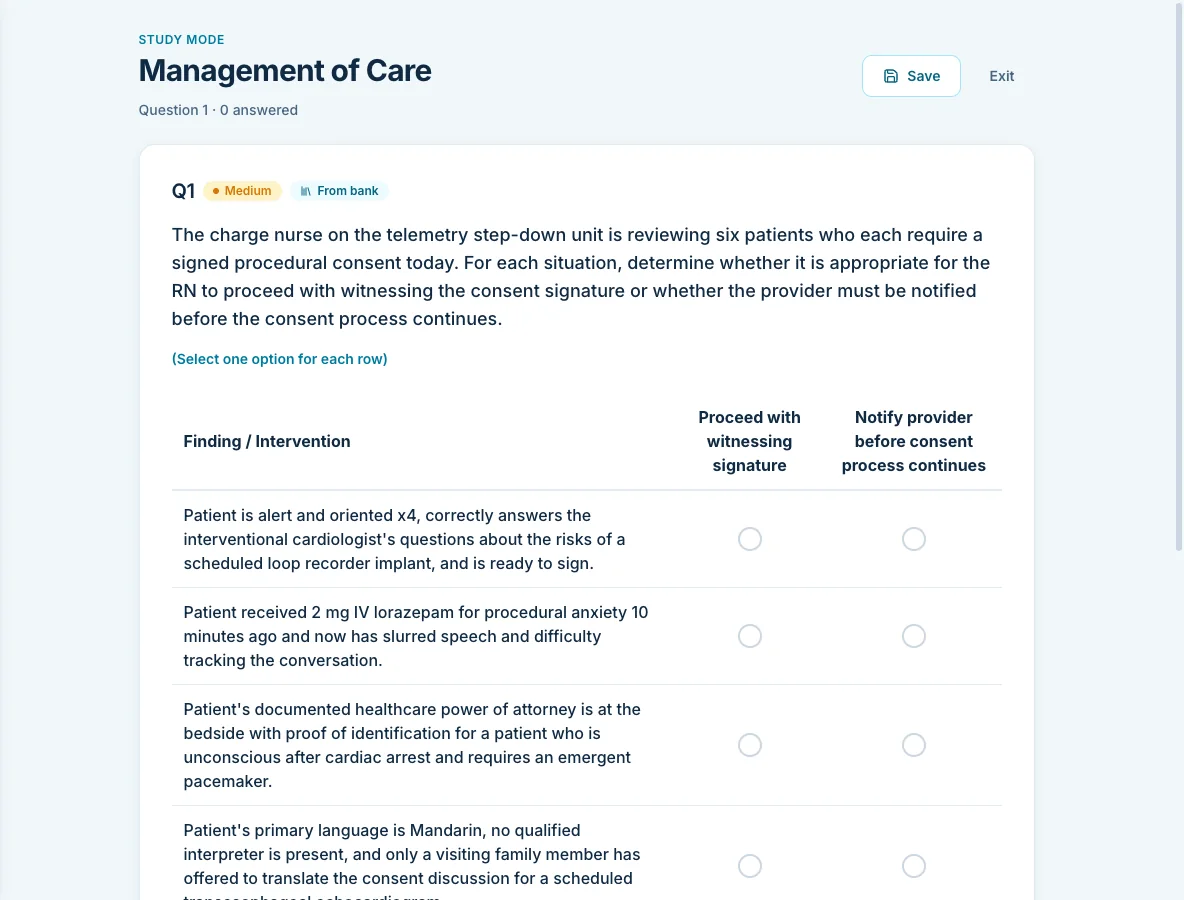
Step-by-step: how to approach nclex matrix multiple response question strategy (The Solution)
Follow these structured steps when answering matrix multiple-response items on the NCLEX-RN.
Step 1: Check the Input Controls
Examine the grid format before reading the text. Look at the selection boxes in the grid. Square boxes indicate multiple-response check boxes. Circular buttons indicate single-choice options per row. Identifying square boxes alerts you that +/- scoring applies to the entire item.
Step 2: Review Client Data Tabs
Open and read all available chart tabs. Check the history, physical assessment, vital signs, laboratory findings, and provider orders. Note abnormal findings carefully. For instance, recognize that restless behavior and headache are early signs of rising intracranial pressure. In contrast, widening pulse pressure is a late finding.
Step 3: Evaluate Rows Independently
Treat each row as an isolated true-or-false statement. Compare the client data directly against the column header, such as "Indicated" versus "Contraindicated". Do not make assumptions beyond documented chart facts. Structured revision in a structured NCLEX study plan builds this disciplined evaluation routine.
Step 4: Select Only Confirmed Findings
Click the check box only when documented evidence supports your choice. Selecting an incorrect cell subtracts a point from your item total. When uncertain about an option, avoid speculative clicks. If you need real-time coaching, use our AI NCLEX tutor to review rationale models.
Common mistakes to avoid (The Warning)
Candidates frequently commit avoidable errors on matrix items. The most damaging error is over-selecting options. Because incorrect choices deduct points, checking boxes without solid evidence rapidly reduces your score to zero.
Another common mistake is treating rows as mutually exclusive when they are not. In matrix multiple-response grids, a row might require multiple checks or none at all depending on the column categories. Always read column headers with extreme precision.
Candidates also fail to synthesize updated chart entries across unfolding steps. For example, when monitoring client trends, failure to recognize subtle neurological declines leads to incorrect intervention choices. Always verify that orders match current client status.
Finally, candidates often rush their pacing on complex tables. Allocate sufficient time to verify each cell against laboratory values and vital trends. Thoughtful verification protects your earned points on every scoring grid.
Expert insight and what changes next (The Authority)
Nurse educators emphasize that matrix formats mirror authentic clinical documentation systems. Electronic health records require nurses to evaluate multiple interventions across distinct assessment parameters simultaneously. Matrix questions evaluate your capacity to make safe, parallel judgments.
Understanding NCSBN scoring structures provides immediate testing clarity. Remember that 0/1 scoring applies to standard multiple-choice items, select-N items, drop-down cloze items, drag-and-drop items, matrix multiple-choice rows, and bow-tie boxes. Plus-minus scoring applies only to select-all-that-apply, matrix multiple-response, and highlight formats.
Rationale items that use dyads or triads require both linked components to be correct before awarding credit. Candidates preparing for provincial regulators in Canada or state boards in the United States must apply these exact scoring principles during study sessions.
Executing a consistent nclex matrix multiple response question strategy reinforces clinical precision. Systematically validating each finding against client evidence supports safe nursing practice on exam day and in clinical practice.
Frequently asked questions
How is a matrix multiple-response item scored on the NCLEX-RN?
NCSBN scores matrix multiple-response items using plus-minus scoring with an item floor of zero. Each correct selection earns one point, while each incorrect selection subtracts one point.
How can I tell matrix multiple choice from matrix multiple response?
Matrix multiple-choice grids use circular radio buttons that allow only one choice per row. Matrix multiple-response grids use square check boxes that permit multiple selections.
Can my score on a matrix multiple-response item become negative?
No, your total score for the item cannot drop below zero. Plus-minus scoring stops deducting points once the total item score reaches zero.
Should I guess on matrix multiple-response questions?
Avoid random guessing on matrix multiple-response grids. Because incorrect selections deduct earned points, you should only select options supported by chart evidence.
Where do matrix items appear on the NCLEX-RN?
Matrix items appear as stand-alone clinical questions and within the three required unfolding case studies. Each unfolding case study contains six items mapped to clinical judgment steps.
Get new insights as they publish
One evidence-checked article at a time, plus a free-trial link. No sequence, one click unsubscribes.