NCLEX SIADH vs Diabetes Insipidus Clinical Cues: Case Study Guide
Mastering nclex siadh vs diabetes insipidus clinical cues requires analyzing hormone shifts in blood and urine. Syndrome of inappropriate antidiuretic hormone (SIADH) causes water retention. This leads to dilutional hyponatremia and concentrated urine. In contrast, diabetes insipidus (DI) causes massive water loss. This leads to hypernatremia, high blood concentration, and dilute urine. Recognizing these opposite laboratory patterns helps candidates prioritize the right hypothesis and choose safe nursing actions.
What are NCLEX SIADH vs diabetes insipidus clinical cues? (The Problem)
On the Next-Generation NCLEX (NGN), fluid scenarios test clinical judgment across changing data. Candidates often memorize static lab charts without understanding how antidiuretic hormone (ADH) works. When a case study introduces head trauma or brain surgery, both conditions share early neurological signs. Restlessness, confusion, and headache can signal brain cell swelling or severe dehydration.
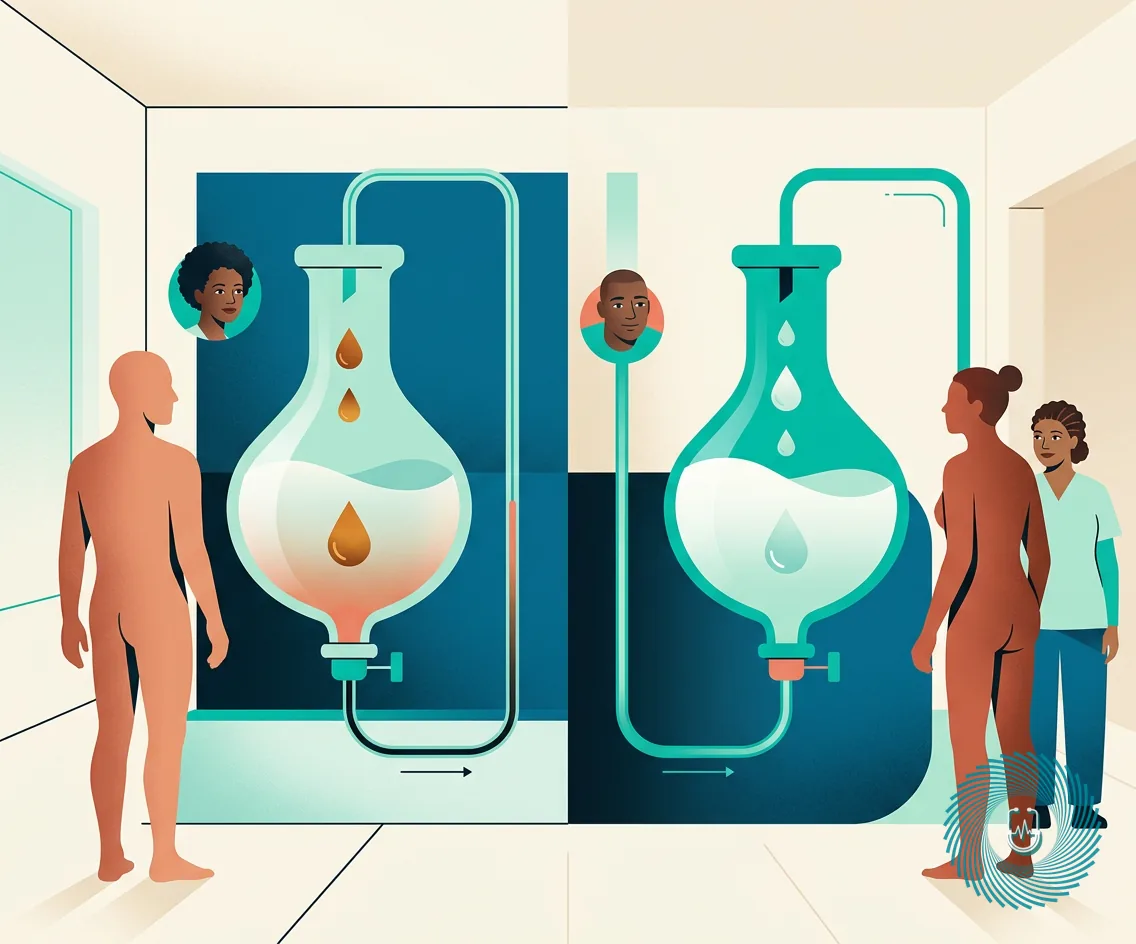
The main conflict involves water volume and particle concentration. In SIADH, the body makes too much ADH. This causes the kidneys to pull water back into the blood. The client develops hypervolemia without peripheral swelling because water moves inside cells. In DI, ADH is low or kidneys fail to respond. The client loses high amounts of dilute urine, risking hypovolemic shock.
Understanding nclex siadh vs diabetes insipidus clinical cues requires comparing blood and urine. When blood is dilute, urine is concentrated. When blood is concentrated, urine is dilute. Missing this link causes candidates to misread lab values and pick dangerous fluid orders.
Why understanding these clinical cues matters on the NCLEX (The Data)
The NCSBN Clinical Judgment Measurement Model organizes unfolding cases into six steps. All six cognitive skills sit in Layer 3. Endocrine items test candidate skill in recognizing cues and generating safe solutions under exam conditions.
Practice banks must reflect these unfolding clinical charts. NCLEXIT provides 52 unfolding case-study scenarios and a bank of 4028 practice questions (Source: NCLEXIT production data). In addition, 130 voice scenarios measure clinical choices with a 61.1 mean discrimination index across voice scenarios (Source: NCLEXIT production data). This rigorous testing format helps candidates evaluate dynamic client shifts.
To prepare well, candidates study using an adaptive nclex study plan. Comparing endocrine problems prevents critical mistakes on exam items. Giving hypotonic fluids to a client with SIADH triggers cerebral swelling. In contrast, restricting fluids in DI accelerates circulatory collapse and causes severe tissue hypoperfusion.
Step-by-step: how to approach nclex siadh vs diabetes insipidus clinical cues (The Solution)
Follow these steps to work through unfolding NGN endocrine case studies.
Step 1: Recognize cues in urine output and vital signs
Examine intake and output charts alongside vital signs. In DI, look for high urine output, often 4 to 20 liters daily. Watch for tachycardia and low blood pressure. In SIADH, look for low urine output with normal or slightly high blood pressure.
Step 2: Analyze paired serum and urine laboratory values
Compare blood sodium and osmolality against urine specific gravity. SIADH shows low blood sodium under 135 mEq/L and high urine specific gravity above 1.030. DI shows high blood sodium over 145 mEq/L and low urine specific gravity under 1.005.
Step 3: Prioritize hypotheses based on neurological risk
Identify the primary threat to client safety. For SIADH, severe low sodium creates an acute risk for seizure activity and brain swelling. For DI, severe dehydration threatens cardiac output. Review structured nclex study notes to reinforce these opposite mechanisms.
Step 4: Generate solutions and verify physician orders
Match the intervention to the underlying problem. SIADH care includes fluid restriction, often 800 to 1000 mL daily, and hypertonic saline for severe symptoms (Source: Lewis's Medical-Surgical Nursing, 12th Ed.). DI care includes fluid replacement and hormone therapy, such as desmopressin (DDAVP).
Step 5: Take action with precise nursing safety measures
Set up seizure precautions for the client with SIADH. Weigh the client daily at the same time on the same scale. For DI, give prescribed desmopressin by nasal spray or intravenous injection. Measure urine output hourly to check kidney response.
Step 6: Evaluate outcomes against baseline parameters
Track lab values after treatment begins. Effective SIADH care leads to rising blood sodium and more urine output. In DI, effective desmopressin therapy results in lower urine volume and rising urine specific gravity.
Common mistakes to avoid on the NCLEX (The Warning)
Candidates often confuse which body compartment is concentrated and which is dilute. A common mistake is looking for body swelling in SIADH. Because retained fluid enters cells evenly, dependent edema is usually absent.
Another dangerous mistake is correcting low sodium too quickly in SIADH. Raising blood sodium too fast causes osmotic demyelination syndrome. This condition causes lasting brain damage. The nurse must infuse hypertonic saline slowly on an electronic pump.
In diabetes insipidus, candidates often miss water intoxication after desmopressin starts. If urine output drops and a headache begins, the drug dose may be too high. Practicing with an ai nclex tutor helps identify subtle symptom shifts before test day.
Expert insight and what changes next (The Authority)
On the NCLEX-RN, endocrine disorders appear inside unfolding client records. Charts contain surgical notes, intake logs, and lab results. Candidates must tell central DI apart from nephrogenic DI based on response to desmopressin.
When prioritizing care, connect fluid shifts to vital organ perfusion. Early signs of rising intracranial pressure are changes in level of consciousness and headache. A widening pulse pressure is a late sign of rising intracranial pressure.
Mastering nclex siadh vs diabetes insipidus clinical cues helps candidates answer complex clinical judgment items. Remember the basic rule: SIADH holds water, diluting blood and concentrating urine. DI dumps water, concentrating blood and diluting urine.
Frequently asked questions
What is the primary laboratory difference between SIADH and DI?
SIADH presents with low serum sodium, low serum osmolality, and high urine specific gravity. DI presents with high serum sodium, high serum osmolality, and low urine specific gravity.
What are the earliest neurological cues of hyponatremia in SIADH?
Early cues include headache, restlessness, and mild confusion as water shifts into brain cells. If unaddressed, this can progress to seizures and coma.
How does desmopressin (DDAVP) work in diabetes insipidus?
Desmopressin acts as synthetic antidiuretic hormone, prompting renal tubules to reabsorb water. This reduces total urine output and increases urine specific gravity.
Why is dependent edema rare in clients diagnosed with SIADH?
Fluid retention in SIADH expands both intracellular and extracellular compartments evenly. This expansion produces weight gain without marked dependent peripheral edema.
Get new insights as they publish
One evidence-checked article at a time, plus a free-trial link. No sequence, one click unsubscribes.